

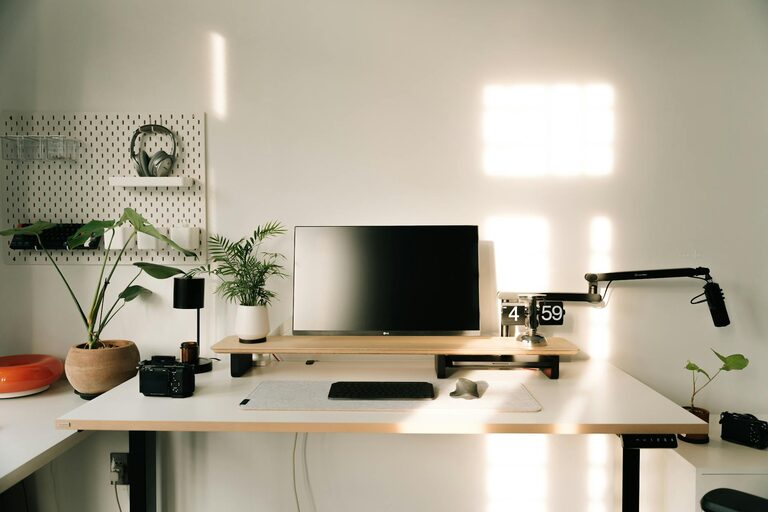
Creating a productive home office environment is essential for anyone working remotely or managing tasks from home. A well-organized and comfortable workspace can help increase focus, reduce stress, and improve overall work efficiency. Whether you’re setting up a new space or looking to improve your current one, these tips will guide you in creating a home office that works for you.
Choose the Right Location
Selecting the best spot for your home office is the first step in building a productive environment.
– Find a Quiet Area: Look for a space away from household noise and distractions.
– Consider Natural Light: A spot near a window provides natural light, which can boost mood and energy.
– Assess Space and Comfort: Ensure there’s enough room for your furniture and equipment, with enough clearance to move comfortably.
If you have limited space, consider using a part of your living room, bedroom, or even a closet that can be converted into a workspace.
Invest in Comfortable and Functional Furniture
Your chair and desk are the foundation of your home office. Prioritize ergonomics to maintain comfort during long work hours.
– Ergonomic Chair: Choose a chair with good back support and adjustable height.
– Desk Size: Select a desk that fits your equipment and leaves space to work comfortably.
– Adjustable Setup: If possible, use an adjustable desk to alternate between sitting and standing.
Comfortable furniture not only prevents physical strain but also helps maintain focus throughout the day.
Organize Your Workspace Effectively
A clutter-free desk improves concentration and productivity. Create a system to keep everything organized.
– Use Storage Solutions: Shelves, drawers, and filing cabinets help keep supplies sorted.
– Declutter Regularly: Remove unnecessary items and papers from your desk at the end of each day.
– Keep Essentials Accessible: Place frequently used items within easy reach.
Consider labeling storage containers or using color-coded folders for quick identification.
Optimize Lighting for Productivity
Good lighting reduces eye strain and uplifts your workspace atmosphere.
– Maximize Natural Light: Position your desk near a window if possible.
– Use Task Lighting: A desk lamp with adjustable brightness helps focus light where you need it.
– Avoid Glare: Arrange screens and lights to minimize reflections and glare.
Warm, bright lighting can create an inviting environment that encourages work.
Minimize Distractions
Distractions can derail your workflow, so it’s important to manage them proactively.
– Establish Boundaries: Communicate with family or housemates about your working hours.
– Use Noise-Canceling Headphones: They help block background noise.
– Limit Digital Interruptions: Turn off non-essential notifications on your devices.
Creating a dedicated work mindset helps signal to yourself and others that it’s time to focus.
Incorporate Personal Touches and Greenery
Adding personal elements can make your workspace enjoyable and motivating.
– Decorate Thoughtfully: Choose artwork or photos that inspire you.
– Bring in Plants: Indoor plants improve air quality and add a sense of calm.
– Play Background Music: Low-volume, instrumental music can enhance concentration for some people.
Balancing functionality with personalization makes your home office a place where you want to spend time.
Manage Technology and Connectivity
Smooth technology use is crucial for productivity.
– Reliable Internet: Ensure your internet connection is strong and stable.
– Organize Cables: Use cable organizers to keep cords tidy and avoid tangles.
– Use Quality Equipment: Invest in a good monitor, keyboard, and mouse to reduce fatigue.
Regularly updating software and backing up your work can prevent technical issues during your workday.
Maintain a Healthy Work Routine
Your environment impacts how you work, but your habits are equally important.
– Set Clear Work Hours: Define start and finish times to create structure.
– Take Regular Breaks: Short breaks throughout the day improve focus and reduce burnout.
– Stay Hydrated and Move: Keep water nearby and stand or stretch periodically.
Combining a well-designed home office with healthy habits maximizes your productivity and wellbeing.
—
Creating a productive home office doesn’t have to be complicated. By choosing the right location, investing in ergonomic furniture, organizing your workspace, and maintaining healthy routines, you can build an environment that supports your work and enhances your daily experience. Start with small changes and tailor your space to fit your needs—you’ll soon notice the difference in your productivity and overall satisfaction.